The Ultimate Guide to Neuro-Affirming Pediatric Speech Therapy for Toddlers (Ages 1–3) in Research Triangle Park, NC
Scan the popular topics below and simply click on whatever resonates most with your child’s unique journey to explore further.
Gestalt Language Processing vs. Analytic Speech Development in Toddlers
If you are a parent in the Research Triangle Park area with a two-year-old who isn’t yet using single words to communicate, you’ve probably heard the term “late talker.” For children who develop language through Analytic Speech Development, they acquire language by using single words (e.g “ball”), then combining words (e.g. “red ball”), into phrases (e.g. “see red ball”, into sentences (e.g.“I see the red ball”). This is considered “bottom-up” processing. However, this isn’t always the case, for our neurodivergent and/or Autistic children. While there are some Autistic children that are Analytic Processors, there are some that don’t learn language from the bottom-up, but the top-down which is Gestalt Language Processing (GLP).
What is Gestalt Language Processing? Instead of learning language with a word-by-word analytic approach, Gestalt Language Processors learn language in larger “chunks” or scripts. They are learning language from the “top-down” and using whole phrases, songs, scripts to express themselves. These kids are considered “intonation babies” where you may hear them start singing or humming, or matching the intonation of the things they hear. They may repeat long quotes from their favorite TV shows, sing the melodies of songs, or communicate their feelings by enthusiastically repeating familiar phrases and scripts with a lot of musicality and expressive emotion in their voice. These are hallmark signs of Gestalt Language Processing.
Gestalt Language Processors also use two forms of Echolalia, Immediate Echolalia (when you say something to you they repeat it right back) or Delayed Echolalia (using previously learned phrases/utterances/scripts). Echolalia is a valid form of communication for these children and is used as a strength during their treatment sessions.
A neuro-affirming approach to pediatric speech therapy recognizes that repeating words and media scripts isn’t a behavior problem to be “fixed”—it is meaningful communication. When your toddler repeats a phrase, they are actively trying to connect with you. Rather than redirecting a child away from their scripts, neuro-affirming therapists tailor their support to how your toddler’s unique brain works, honoring their echolalia and using their favorite scripts as a natural, stress-free bridge to original language. To do this, they utilize the Natural Language Acquisition (NLA) Framework to determine what stage your Gestalt Language Processor is at.
How does this translate to our daily sessions? If your toddler repeats a specific line from a cartoon, we don’t ignore it—we “decode” it. We understand that a line a character said when they were scared is often your child’s way of saying, “I’m feeling anxious right now.” Instead of trying to stop the repetition, we meet them in their world. We validate the feeling behind the quote, then gently show them how to “mix and match” those familiar phrases to express new ideas. By honoring these scripts rather than fixing them, we transform a favorite TV quote into a functional stepping stone toward original, spontaneous conversation.
Navigating the North Carolina CDSA "Age-3 Cliff" and Early Intervention Transitions in Pediatric Speech Therapy
For North Carolina families, the toddler years come with a highly specific regulatory hurdle: the transition out of the NC Infant-Toddler Program, commonly managed by your local Children’s Developmental Services Agency (CDSA). In North Carolina, state early intervention services end abruptly on the day your child turns 3 years old. For parents in Raleigh, Durham, Cary, Apex, and Wake Forest, this transition to the public school system’s Exceptional Children’s Preschool Services (Part B) can feel incredibly daunting, earning it the nickname the “Age-3 Cliff”.
The fear of losing consistent support is valid. Navigating the shift to Wake County or Durham Public Schools requires a formal transition meeting between 90 days and 9 months before your child’s 3rd birthday. School evaluations can sometimes feel overwhelmingly deficit-focused, looking primarily at what a child cannot do in order to qualify them for an Individualized Education Program (IEP).
Proactive planning is essential to ensure there is no lapse in your child’s care. All About Therapy services kids as a CDSA provider and also after aging out of the CDSA. We provide speech therapy in the natural environment (homes, daycares, ABA centers, etc.) as well as in our Raleigh clinic. Private, neuro-affirming pediatric speech therapy can serve as a vital bridge during this transition. By establishing care before your toddler ages out of the CDSA, you ensure they have a dedicated, consistent advocate and navigator. Private therapists can collaborate with service coordinators, provide strength-based data for upcoming IEP meetings, and ensure your child’s progress doesn’t stall during the bureaucratic handoff to the local education agency.
If you are reading this and your child has already turned three or four, and you feel like you have completely missed the early intervention window—please take a deep, reassuring breath. It is never too late to start pediatric speech therapy, and meaningful progress is absolutely possible at any age. Do not carry the heavy burden of “wait and see” guilt. If your family missed the formal transition out of the NC Infant-Toddler Program, our team at All About Therapy is here to welcome you with open arms and zero judgment.
We can help you navigate the system, prepare for school evaluations, advocate for a neuro-affirming Individualized Education Program (IEP), and provide immediate private therapy so your child’s communication journey is supported from day one. You do not have to figure out this complex system alone—call us, and let us help you build the village your child deserves.
The Role of Stimming and Sensory Regulation in Pediatric Speech Therapy
In traditional speech therapy programs, a toddler’s natural movements—such as hand-flapping, rocking, or spinning—are often viewed as distractions that must be suppressed before learning can occur. You may have even heard the harmful phrase “quiet hands” used to demand stillness. Neuro-affirming pediatric speech therapy views this behavior very differently.
Stimming (self-stimulatory behavior) is a vital tool for self-regulation. A sensory-regulated toddler is a communicating toddler. We honor flapping, rocking, and unique movements because they help a child’s nervous system calm and feel safe. A dysregulated brain cannot learn language, and demanding that a child suppress their natural movements only creates anxiety and trauma.
Instead of suppressing these behaviors, we use co-regulation and a variety of sensory supports tailored to your child’s needs. This might include environmental tools like swings and trampolines, or handheld supports such as weighted ‘heavy buddies,’ silicone chewies, and tactile fidgets. These objects serve as a bridge to ‘establish safety,’ helping a toddler feel secure enough in their body to finally engage with their voice.
Furthermore, true communication is built on authentic connection, not strict compliance. Instead of using complex reward systems or taking away a child’s favorite toys to force them to speak, we focus on genuine connection. We don’t believe in “bribing” or withholding the things a toddler loves just to get them to produce a sound or a word. Play should be entirely child-led. If your toddler has a deep, passionate interest (monotropism) in spinning the wheels of a toy truck, we will join them in that joy and spend the session talking about wheels. We don’t demand that a child play “appropriately” by neurotypical standards; we recognize functional play and use it as the foundation for building trusting relationships.
| Myth Stimming is a “distraction” or a barrier to learning that must be stopped. |
Fact Stimming is a functional tool used by toddlers to manage sensory input and stay emotionally regulated. |
| Myth A child who is moving or scripting isn’t “listening” or paying attention. |
Fact Movement often enables focus. For many neurodivergent toddlers, “quiet hands” actually decreases their ability to process language. |
| Myth Therapy should focus on “extinguishing” repetitive behaviors to make a child appear more typical. |
Fact Regulation is the prerequisite for communication. We honor the stim to clear the “cognitive bandwidth” needed for connection. |
Understanding AAC Devices and Non-Verbal Communication Paths for Toddlers
When a two-year-old isn’t meeting the standard developmental milestones, it is easy for parents to be alarmed and assume their child has some type of communication delay. Stay mindful, neurodivergent toddlers often follow a different speech developmental path, not necessarily a delayed one.
Neuro-affirming speech therapy operates on a foundational principle: presuming competence. Just because your toddler isn’t speaking verbally does not mean they aren’t listening, understanding, and experiencing all that’s around them. We’re proponents of moving away from a deficit mindset that uses your child’s neurotypical peers as the ‘baseline, and instead shifting to a strength-based empowering self-advocacy approach.
Spoken words are only one valid mode of a toddler’s communication. Whether your toddler uses signs, gestures, behavior, pointing, or Augmentative and Alternative Communication (AAC) devices, every mode is nurtured and celebrated.
Many parents are surprised to learn that they are already using AAC with their child every day as AAC is any tool or method that “augments” (adds to) or provides an “alternative” to spoken words. Consider these examples; Does your child point to a picture of a juice box on the fridge? Or perhaps they bring you the empty box of their favorite crackers? These are functional “graphic symbols” used to bridge the gap between a thought and a word.
There are also low tech and high tech AAC options out there. Low tech can be written communication, PECs (Picture Communication Exchange), or Core boards. High tech AAC are robust electronic, speech generating systems, usually on an iPad or tablet, that an SLP can evaluate and trial with your child to find the best fit for their communication needs.
Research shows that providing these tools actually increases the likelihood of a child developing spoken language because it lowers their frustration and allows them to experience the power of successful communication right now. When a toddler is given robust communication tools that align with how their brain naturally works, frustration and meltdowns dramatically decrease. Always remember that all behavior is communication and a toddler seeking connection or trying to express an unmet sensory need is not “acting out” or ‘delayed’—they are showing us exactly who they are and the different path they require to thrive.
How to Choose a Neuro-Affirming Speech Therapist in Raleigh, Durham, and Cary, North Carolina
Finding the right provider for your toddler in the Raleigh-Durham area requires looking beyond standard credentials. You need a partner who respects your child’s humanity, autonomy, and unique neurological makeup. When screening a potential pediatric speech therapy provider, there are several key indicators of a truly neuro-affirming practice.
First, ask about their stance on body autonomy. A neuro-affirming therapist will never use hand-over-hand compliance, force physical prompts, or demand unwanted touch – all common practices used to shape a child’s behavior or force participation with traditional pediatric speech therapy. Often, these boundary violations can be subtle and are framed to parents as simply “helping” or “guiding” the child to learn. For example, “hand-over-hand” prompting occurs when a therapist physically grabs a child’s hand or wrist to force them to point to the “correct” flashcard, manipulate a toy, or press a button on an AAC (speech) device.
Unwanted touch also commonly surfaces in traditional social skills training when a therapist physically turns a child’s chin to force eye contact, or when they demand a child tolerate a high-five, handshake, or hug as a greeting or reward.
While traditional pediatric speech therapy justifies these actions as teaching neurotypical social norms, they teach children a profoundly harmful lesson: that their bodies do not belong to them, that adults have the right to physically manipulate them, and that they do not have the power to say “no” or “stop” . A truly neuro-affirming therapist prioritizes a child’s body autonomy and personal agency, meaning they will never force physical compliance, and they will always honor a child’s refusal or protest without punishment.
Neuro-affirming pediatric speech therapy actively teaches your toddler that they have the right to say “no,” to protest, and to set boundaries. Self-advocacy starts in toddlerhood, and the ability to safely refuse an uncomfortable situation is prioritized above forced compliance.
Second, be sure to ask about eye contact. If a clinic writes goals requiring your toddler to make sustained eye contact, look elsewhere. Forcing eye contact can be physically painful and highly distracting for neurodivergent children. A neuro-affirming therapist focuses on genuine engagement rather than asking a child to ‘act normal’ by hiding their natural traits. Finally, look for a practice that prioritizes caregiver coaching. You are your child’s best teacher, and a great therapist will provide you with the empathetic tools needed to turn everyday routines at home into stress-free, language-building opportunities.
Echolalia and Scripting: A short summary of GLPs
If you are a parent navigating the toddler years in the Research Triangle Park (RTP) area, you might find yourself puzzled by how your child communicates. Perhaps your two-year-old struggles to say single words like “cup” or “milk,” but can flawlessly recite entire scenes from their favorite cartoons like Bluey or Peppa Pig. In traditional, pediatric speech therapy programs, this repetition—known as echolalia—is often dismissed as meaningless “parroting” or a behavior that needs to be discouraged. However, neuro-affirming pediatric speech therapy reframes this perspective and understands your child is not just mimicking; they are showing signs of being a Gestalt Language Processor.
While some children learn language analytically (word-by-word, building up to phrases), others are what we call Gestalt Language Processors (GLPs) and learn language in larger “chunks” or scripts. For a Gestalt Language Processor, a long, intonation-heavy quote from a favorite cartoon holds deep emotional and communicative meaning. Instead of trying to force these toddlers to communicate in single words, neuro-affirming speech therapy we tailor their support to how their unique brain works.
To understand how your child’s brain is working, let’s look at a character almost every adult knows: Bart Simpson. When Bart shouts, “¡Ay, caramba!”, he isn’t trying to teach you a lesson in Spanish grammar. He isn’t thinking about the individual words “Ay” or “Caramba.” To Bart (and to us), that phrase is a “Gestalt”—a single, unbreakable chunk of sound that carries a massive amount of emotional weight.
Depending on the scene, that one script can mean:
- “I’m in big trouble.”
- “That’s unbelievable!”
- “Everything is going wrong.”
Now, imagine your toddler is Bart. If your child recites a 10-second clip from Bluey, they aren’t “parroting” noise. They have captured a “musical chunk” of language that represents a specific feeling—just like “Ay, caramba!” represents shock.
The Traditional Mistake: In traditional therapy, a therapist might hear Bart say “Ay, caramba!” and try to “fix” it by forcing him to say the single word “Surprise” or “Mad.” They would treat the script as a “bad habit” to be broken so he can learn “real” words.
The Neuro-Affirming Approach: A neuro-affirming therapist hears “Ay, caramba!” and says, “I hear you, Bart. You’re feeling overwhelmed.” We validate the meaning of the whole chunk first. Once the child feels heard, we then help them “break” that big chunk into smaller pieces—eventually turning “Ay, caramba!” into “Ay, I’m mad” or “Caramba, that’s big!”
The Full Circle: Your child isn’t failing to learn words; they are simply starting with the “Big Picture” (the script) and working their way down to the details. By honoring their “Ay, caramba” moments, we aren’t just encouraging “parroting”—we are building the foundation for their own original, spontaneous voice.
So, how can parents in Raleigh “decode” what their child is trying to say? It requires looking at the emotional context of the script rather than the literal words. If your toddler repeats a line a character from a cartoon said when they were scared or frustrated, your child is likely using that script to communicate their own anxiety in the present moment. By validating these scripts instead of discouraging them, we honor their authentic voice. In other words, we use their favorite media scripts as a natural, stress-free bridge to original, spontaneous language, empowering them to communicate on their own terms without ever feeling like their natural communication and voice is “wrong”.
Overcoming Milestone Anxiety: Shifting from Checklists to Connection
The “wait and see” approach often leaves parents feeling stressed and helpless. neuro-affirming pediatric speech therapy offers a powerful paradigm shift: moving away from comparing and leaning deeply into connecting. Traditional milestone charts strictly measure a toddler’s progress by neurotypical, spoken-word standards. We shift from this “deficit” mindset to a “strength-based” model.
Your child’s developmental timeline is entirely their own, and neurodivergent toddlers frequently follow a different, yet equally beautiful, path. We presume competence, knowing that just because a child isn’t speaking verbally doesn’t mean they aren’t listening, understanding, and experiencing a rich internal world. we can help you connect with your child’s valid modes of communication. Whether they are pointing, leading you by the hand, using an AAC (Augmentative and Alternative Communication) device, or simply sharing a quiet moment of joint attention, every single mode of communication is nurtured and celebrated.
When you let go of the neurotypical checklist, you free yourself to truly meet your child where they are. Research highlights that the most powerful moment for a parent isn’t the diagnosis itself, but the shift toward accepting their child’s unique way of being. When we stop measuring our toddlers against a standard neurotypical checklist, we move away from a ‘deficit’ mindset and toward a relationship built on genuine connection and understanding. This sense of empowerment and ‘parent gain’ is what truly lowers stress and allows families to thrive .
Transitioning from North Carolina CDSA to Private Speech Therapy Clinics
For families in North Carolina, the toddler years introduce a massive, anxiety-inducing regulatory hurdle: the “Age-3 Cliff”. State-funded early intervention services provided through the NC Infant-Toddler Program (CDSA) end abruptly on the exact day your child turns three. Navigating the handoff to the public school system’s Exceptional Children’s Preschool Services can feel like stepping into the unknown. Will your child qualify? Will the school-based IEP (Individualized Education Program) focus too much on their deficits?
Proactive planning is required to ensure there is no lapse in your child’s care during this sometimes hectic window. By law, transition planning must occur 90 days before your child’s third birthday. This is where establishing care with a private pediatric speech therapy clinic in the Research Triangle becomes a lifeline. Private therapy provides a consistent, reliable bridge so your toddler’s progress doesn’t stall during the bureaucratic transition.
However, it is vital to ensure that your next therapist is truly neuro-affirming. When vetting a clinic in Raleigh or Durham, ask critical questions about their philosophy. Do they write goals demanding eye contact? (A neuro-affirming therapist knows forced eye contact can be physically painful and will never require it). Do they demand “quiet hands” or forced stillness? (An affirming therapist celebrates whole-body learning). Do they use hand-over-hand compliance? (Affirming practices prioritize body autonomy and a child’s right to say “no”). Finding a therapist who advocates for neurodiversity-affirming goals will ensure your child is supported for who they are, not trained to mask their identity.
Navigating this transition doesn’t have to be a solo journey. At All About Therapy, we are here to be that steady bridge for your family. If you’re feeling overwhelmed by the “Age-3 Cliff” or simply want to ensure your child’s therapy remains a place of joy and dignity, we invite you to reach out. We’ll listen to your story, answer your questions, and share exactly how our neuro-affirming approach can support your child’s unique path. And if for some reason we aren’t the perfect fit, we promise to refer you to the trusted providers who are. You don’t have to step into the unknown alone.
Creating a Neuro-Affirming Home Environment for Late Talkers
When parents realize their two-year-old is a “late talker,” the instinct is often to immediately purchase flashcards and begin drilling them on colors, shapes, and animal sounds. But demanding a frustrated toddler to “point and say” on command rarely yields positive results; instead, it creates tension and turns communication into a chore. While the instinct to grab flashcards and start ‘drilling’ is born out of love, research shows that toddlers learn best through natural, play-based routines rather than ‘on-command’ pointing. In fact demanding performance from a frustrated toddler often backfires, creating a ‘stress response’ that shuts down the brain’s ability to process language . In our practice, we replace the ‘chore’ of drilling with the joy of genuine connection—because a relaxed child is a learning child.
Building a communication-rich home the neuro-affirming way looks entirely different. It starts with dropping the adult agenda and practicing connection over compliance. To truly foster language development, you must follow your childs lead. If your child has a deep, passionate interest in spinning the wheels of a toy truck, don’t take the truck away to force them to look at a flashcard. Instead, get down on the floor and spend the next twenty minutes joyfully talking about wheels. When we join a child in their natural play, their intrinsic motivation to communicate skyrockets. Therapy and language building should happen inside natural daily routines, making it feel exactly like playtime.
Furthermore, We honor a child’s “stims” (self-stimulatory behaviors like hand-flapping, jumping, or rocking) rather than trying to extinguish them. Stimming is how a toddler regulates their nervous system, and a regulated brain is required for learning language. By embracing whole-body movements and setting up sensory-safe spaces at home, you show your toddler that they are safe, respected, and loved exactly as they are. When a child feels secure, their authentic voice will follow.
Scheduling a Neuro-Affirming Speech Therapy Discovery Call in RTP
Making that first phone call to a speech therapy clinic can be intimidating for any concerned parent in the RTP area. You might be dreading a sterile, clinical environment where your child is evaluated solely on what they cannot do. We want to simplify this process because a neuro-affirming screening feels entirely different—and vastly more supportive—than a traditional, deficit-focused clinical evaluation.
When you book a discovery call with our neurodiversity-affirming practice, our primary goal is to listen to your family’s unique story with deep empathy. We aren’t going to hand you a list of things that are “wrong” with your child. Instead, we want to hear about their strengths, their intense passions, and what brings them joy. We will ask how they currently communicate their needs—whether that is through leading you by the hand, repeating media scripts, or using behavior to show frustration.
A neuro-affirming screening prioritizes a child-led, play-based approach. We recognize that young children cannot learn or communicate if their nervous systems are overwhelmed. You will learn about how our clinic environments are designed for sensory regulation, featuring swings, rock walls, and quiet zones so that therapy feels like pure joy. The discovery call is your opportunity to find a true partner in your parenting journey—a team that will coach you, advocate for your child’s IEP, and celebrate their neurodivergent identity.
Are you ready to support your toddler’s authentic voice without the pressure of “fixing” them? Don’t navigate the Age-3 transition alone. Book your Free Discovery Call today serving Raleigh, Durham, Apex, Cary, Wake Forest, and surrounding areas. Let’s partner to celebrate your child’s unique communication journey!
Clinical Frameworks, Sources & Deep-Dive Resources for Parents
1. Applied Behavior Analysis and Echolalia Compliance Models (Lovaas, 1977) This section refers to the landmark behavioral data compiled by O. Ivar Lovaas (1977) detailing early intervention mechanics. This research is utilized to critique legacy compliance frameworks that treated natural speech repetition, or echolalia, as an obstacle to functional communication that needed to be suppressed. Within a neuro-affirming framework, these historical models are countered by modern Natural Language Acquisition data proving that scripting is an essential milestone for Gestalt Language Processors. Explore the historical context of clinical speech behavioral studies via the [Journal of Applied Behavior Analysis].
2. North Carolina Early Intervention Regulatory Framework (NC Infant-Toddler Program) This entry documents the operational guidelines of the North Carolina Infant-Toddler Program, administered regionally by the Children’s Developmental Services Agency (CDSA). This state-mandated regulatory structure dictates the strict timeline where public early intervention support terminates exactly on a child’s third birthday. This operational cut-off creates the administrative “Age-3 Cliff,” making private clinical advocacy essential to prevent gaps in child care during the transition to public school exceptional preschool services. Review the official administrative guidelines via the [North Carolina Department of Health and Human Services (NCDHHS)].
3. The SCERTS Model and Self-Regulation Dynamics (Prizant, et al., 2015) This reference anchors the implementation of the SCERTS framework developed by Dr. Barry Prizant (2015), which establishes social communication and emotional regulation as primary developmental pillars. This clinical methodology provides empirical evidence that self-stimulatory behaviors, commonly known as stimming, are vital self-regulation mechanisms rather than distractions to be corrected. Honoring these movements preserves a toddler’s cognitive bandwidth, clearing the path for functional engagement. Read the foundational research on emotional scaffolding via the [SCERTS Model Framework Resources].
4. Physiological Safety and Cognitive Processing Baselines (Delahooke, 2019) This entry draws upon the pediatric brain science compiled by Dr. Mona Delahooke (2019) in her clinical text Beyond Behaviors. This physiological framework shows that a child experiencing a dysregulated nervous system enters a biological “threat response” that entirely blocks the brain’s capacity to process and learn language. By prioritizing “felt safety” and sensory co-regulation over behavioral compliance, clinicians can successfully build the neurological foundation required for natural communication. Access these pediatric nervous system studies via the [Mona Delahooke Clinical Education Platform].
5. The Zero-Exclusion Model for Communication Access (NJC / ASHA, 2022) This entry aligns with the operational guidelines of the Joint Committee for the Communication Needs of Persons With Severe Disabilities (NJC) updated in 2022. This framework establishes the “Zero-Exclusion” rule, which explicitly states that access to communication tools must never be restricted based on a child’s current cognitive, behavioral, or age benchmarks. It provides the clinical baseline for introducing robust communication tools without demanding that a toddler first “prove” their readiness. Examine the position statement on communication equity via the [American Speech-Language-Hearing Association (ASHA)].
6. Augmentative Communication and Communicative Competence (Light & McNaughton, 2014) This section outlines the definitive criteria for communicative competence developed by Dr. Janice Light and Dr. David McNaughton (2014). This longitudinal research demonstrates that introducing robust Augmentative and Alternative Communication (AAC) tools to non-verbal toddlers does not delay speech, but instead accelerates natural language expression. Equipping a child with immediate graphic or digital symbols lowers communication frustration, resulting in a quantifiable decrease in behavioral meltdowns. Review the structural definitions of AAC competence via the [Majeed Journal of Augmentative and Alternative Communication].
7. Behavioral Intervention and Long-Term Psychological Trauma Analysis (Kupferstein, 2018) This record draws from the quantitative data published by Henny Kupferstein (2018) analyzing the psychological impacts of compliance-based behavioral tracking. The study provides empirical evidence linking strict compliance training—such as forcing unwanted touch or physical chin-turning to demand eye contact—to elevated risks of masking and long-term trauma symptoms in neurodivergent populations. This data justifies why neuro-affirming therapy completely abandons physical prompts in favor of personal agency. Read the full peer-reviewed study via [Advances in Autism].
8. Bodily Autonomy, Boundary Setting, and Pediatric Self-Advocacy (Delahooke Guidance) This entry integrates clinical guidelines regarding pediatric self-protection and bodily boundaries as championed by modern child psychologists. This developmental framework establishes that teaching a toddler that they have the safe right to say “no,” use physical refusal cues, or decline eye contact is a foundational safety skill. Prioritizing personal agency over forced social norms protects children from boundary violations and fosters healthy self-advocacy from early childhood. Access clinical insights on child agency via the [Perspective on Pediatric Behavioral Health].
9. Family Empowerment and Parent Gain Mitigation Models (Neece, et al., 2014) This section references the clinical psychology study conducted by C.L. Neece, J. Liew, and J.A. Weiss (2014) regarding family distress dynamics. The researchers isolated “Parent Gain” and personal empowerment as primary psychological buffers that directly lower daily stress for mothers of neurodivergent children. The data proves that when parents stop measuring their toddlers against neurotypical checklists and instead focus on their unique developmental strengths, parental anxiety drops. Read the empirical analysis via the [Journal of Child and Family Studies].
10. Qualitative Analysis of Pediatric Diagnosis and Family Adaptation (Abbott, et al., 2012) This record reflects the qualitative findings compiled by M. Abbott, P. Bernard, and J. Forge (2012) tracking the operational journey of families navigating a child’s developmental path. This research highlights that the moment of highest positive adaptation occurs when parents pivot away from clinical deficit checklists and embrace relationship-focused connection. This clinical paper underpins the shift from diagnostic panic to positive lifestyle integration. Examine the qualitative parent interview data via [Clinical Child Psychology and Psychiatry].
11. Effectiveness of Parent-Implemented Language Interventions (Roberts & Kaiser, 2011) This entry documents the comprehensive meta-analysis executed by M.Y. Roberts and A.P. Kaiser (2011) evaluating pediatric language models. Their statistical synthesis proves that naturalistic, play-based interventions implemented by coached caregivers are significantly more effective for language acquisition than traditional, structured flashcard drills or on-command tasks. This study serves as the clinical foundation for building language skills within a child’s existing daily routines. Access the full meta-analysis via the [American Journal of Speech-Language Pathology].
12. Discrete-Trial vs. Naturalistic Intervention Continuums (Prizant & Wetherby, 1998) This reference coordinates with the structural analysis co-authored by Dr. Barry Prizant and Dr. Amy Wetherby (1998) defining language training continuums. Their work charts the stark differences between rigid behavioral discrete-trial methods and naturalistic, child-led developmental models. This paper provides the historical and clinical justification for removing adult-driven agendas from early childhood communication therapy, prioritizing natural engagement instead. Read the comparative analysis via the [ASHA National Library of Communication Disorders].
13. Applied Neurological Brain Science for Home Environments (Delahooke Home Systems) This final section details the application of practical brain science to home routines based on established neuro-affirming environmental design protocols. This methodology demonstrates that creating dedicated sensory-safe decompression zones at home and actively validating a child’s natural physical movements stabilizes their nervous system. Once this baseline of physical safety is met, cognitive resources are freed, allowing the child’s authentic voice to emerge naturally. Explore home environmental staging resources via the [Pediatric Neurodiversity Network].

In-network with major providers including Medicaid. We handle the billing so you can focus on your child.
Serving Raleigh, Cary, Apex, Durham and Surrounding Areas
Skip the Waitlists. Speak with a Local Specialist Today.
Call Now: (919) 752-4525
Visit Our NEW Clinic In North Raleigh!
We are excited to announce that we now offer speech and occupational therapy in our new clinic on Millbrook Road in North Raleigh. In the clinic we have swings, trampolines, ball pits, rock walls, games, quiet zones, tunnels, scooter boards and much more! Our Raleigh clinic is currently accepting new patients with no waitlist!

We Travel To Your Child
Less travel, less hassle. Skip the traffic and let our therapists come to you. We provide occupational therapy & speech therapy where your child is most comfortable; their home, daycare, preschool, ABA center, etc. We are locally owned and serve Raleigh, Cary, Apex, Durham and surrounding areas of the triangle.
All About Our Speech Therapy Services
We work with you and your child to reach their developmental speech milestones. Our team listens to parents to achieve your most important goals.

Articulation
We help children improve how they form and pronounce sounds so they can speak clearly and confidently. Therapy focuses on building strong motor patterns for speech through fun, engaging activities.
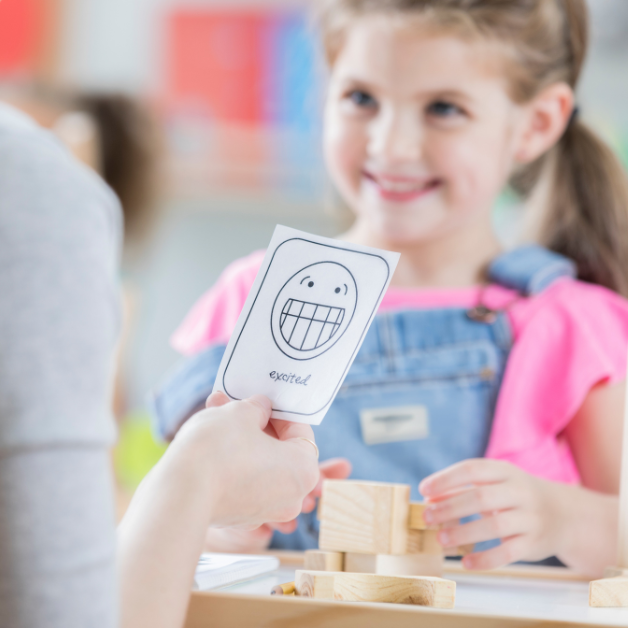
Language Development
Our therapists support expressive and receptive language skills, helping children understand and use words, phrases, and concepts. We foster communication that supports success in school, home, and social environments.

Completing Sentences
We guide children in putting words together to form complete, purposeful sentences. This helps them express thoughts, needs, and ideas more effectively in daily conversations.

Lisps & Stuttering
We provide targeted therapy to help children overcome lisps and manage stuttering with confidence. Sessions focus on building fluency, clear articulation, and effective communication strategies to speak with confidence.

Tongue Protrusions
Our team addresses tongue thrusts and protrusion patterns that can affect speech clarity and oral development. We use evidence-based methods to promote proper tongue placement during speech and rest.
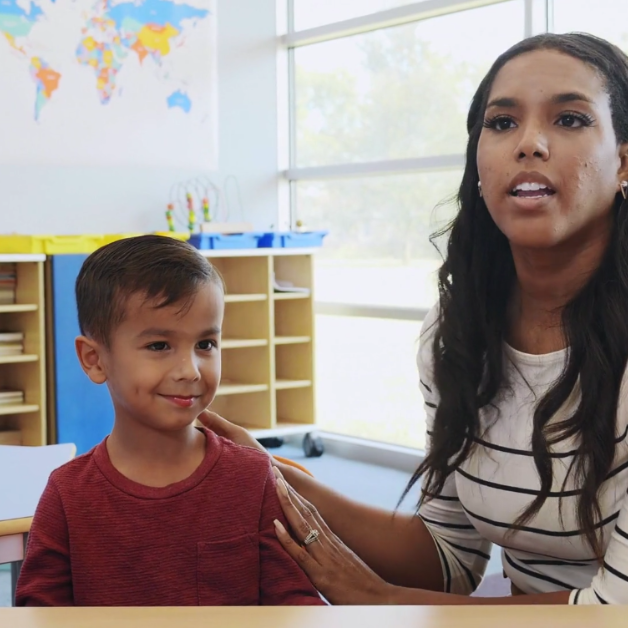
Custom Goals
All About Therapy understands that each and every child is unique. We collaborate closely with parents to ensure their child is achieving meaningful progress in the domains most important to their family. Connect with us to begin the first conversations about the desires you have for your child.
Skip the Waitlists. Speak with a Local Specialist Today.
Call Now: (919) 752-4525How To Get Started
Our Occupational Therapists & Speech Therapists Are Ready To Serve Your Family
1. Reach Out
If you’re ready to sign your child up for occupational therapy or speech therapy in North Carolina, you can complete the first step of filling out our Get Started form with your information. If you have questions give us a call at 919-448-6018
2. Setup Services
Review and verify your insurance coverage for services (We accept Blue Cross Blue Shield, Aetna, & Medicaid). Arrange the best days, times, and preferred location for your child’s therapy services (clinic, travel therapy, or a personalized mix).
3. Therapy Starts
Your OT or ST will reach out to you for initial discussions about your child, and their individual needs. Your child will receive ongoing play-based therapy, with progress being tracked by our team of licensed & experienced therapists.
Parent Reviews
“Our therapist has such a kind and gentle demeanor. When she worked with my son, it was obvious that she put a great deal of thought, research, and planning into the sessions she had with him. Her activities were tailored to his needs and very appropriate for his age and developmental level…She has been a blessing to our family!”
“Your practice is outstanding because of therapists like Natasha. She is amazing! She is understanding and thoughtful when working with a girl with some substantial sensory challenges. We are making progress in ways I didn’t know were possible this year. We are so happy to be with your practice and especially Natasha!”
“Our therapist was always professional and prompt for the occupational therapy sessions. She completed assessment testing on small and large motor skills issues with my son and she prepared and executed a treatment plan. My son’s letter formation and handwriting improved immensely over the course of the treatment sessions. I would recommend her occupational therapy wholeheartedly.”
Parent Reviews
“Our therapist has such a kind and gentle demeanor. When she worked with my son, it was obvious that she put a great deal of thought, research, and planning into the sessions she had with him. Her activities were tailored to his needs and very appropriate for his age and developmental level…She has been a blessing to our family!”
“Your practice is outstanding because of therapists like Natasha. She is amazing! She is understanding and thoughtful when working with a girl with some substantial sensory challenges. We are making progress in ways I didn’t know were possible this year. We are so happy to be with your practice and especially Natasha!”
“Our therapist was always professional and prompt for the occupational therapy sessions. She completed assessment testing on small and large motor skills issues with my son and she prepared and executed a treatment plan. My son’s letter formation and handwriting improved immensely over the course of the treatment sessions. I would recommend her occupational therapy wholeheartedly.”
Skip the Waitlists. Speak with a Local Specialist Today.
Call Now: (919) 448-6018